Evidence first
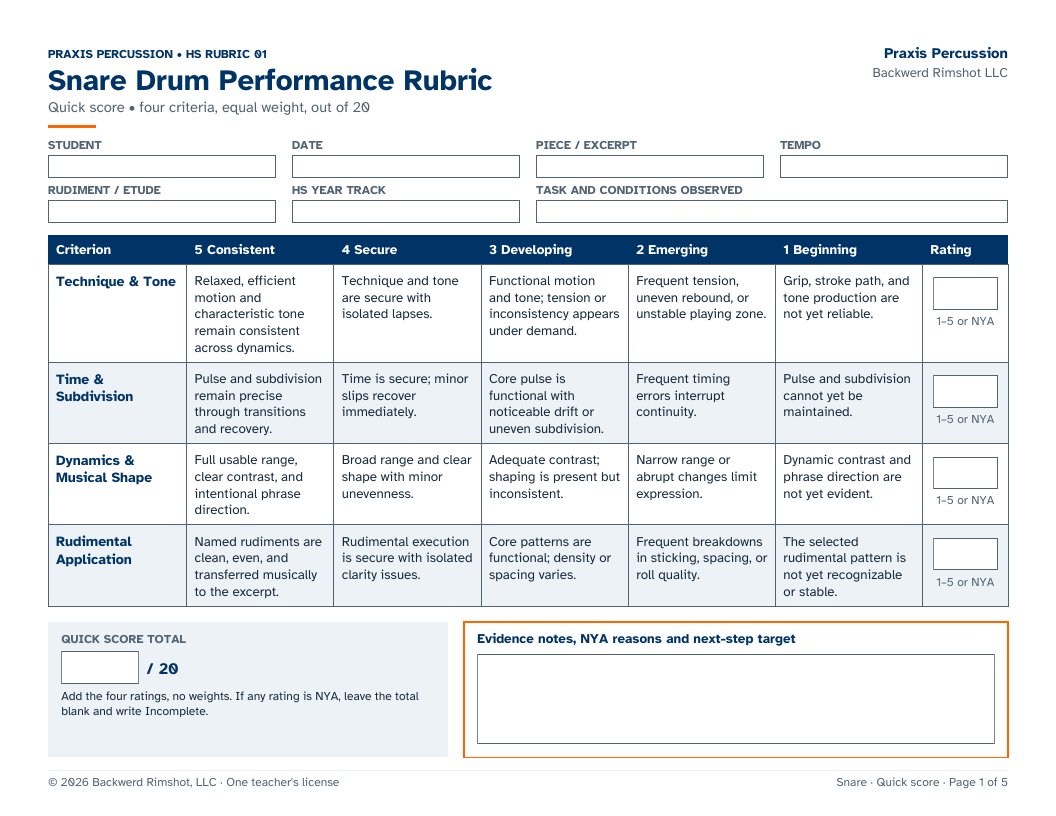
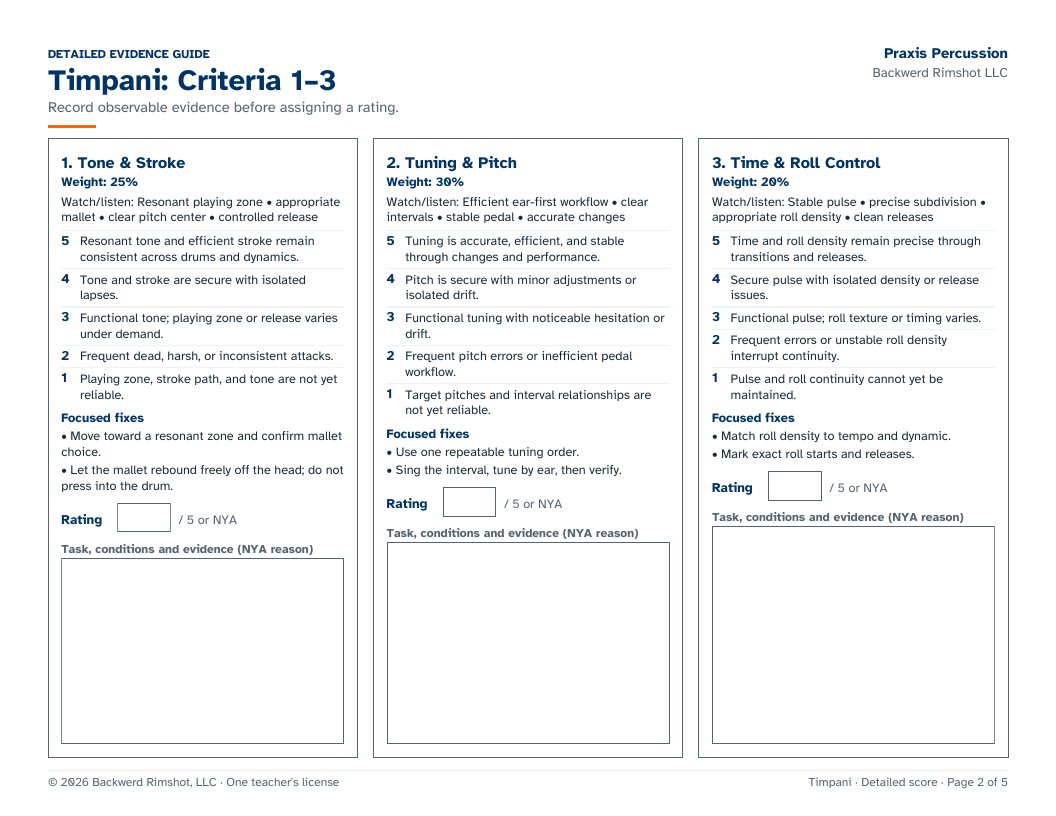
Write the task and conditions, then choose the level whose whole descriptor best fits what you saw and heard.
Praxis Percussion · Assessments
Nine rubrics for a high school percussion program
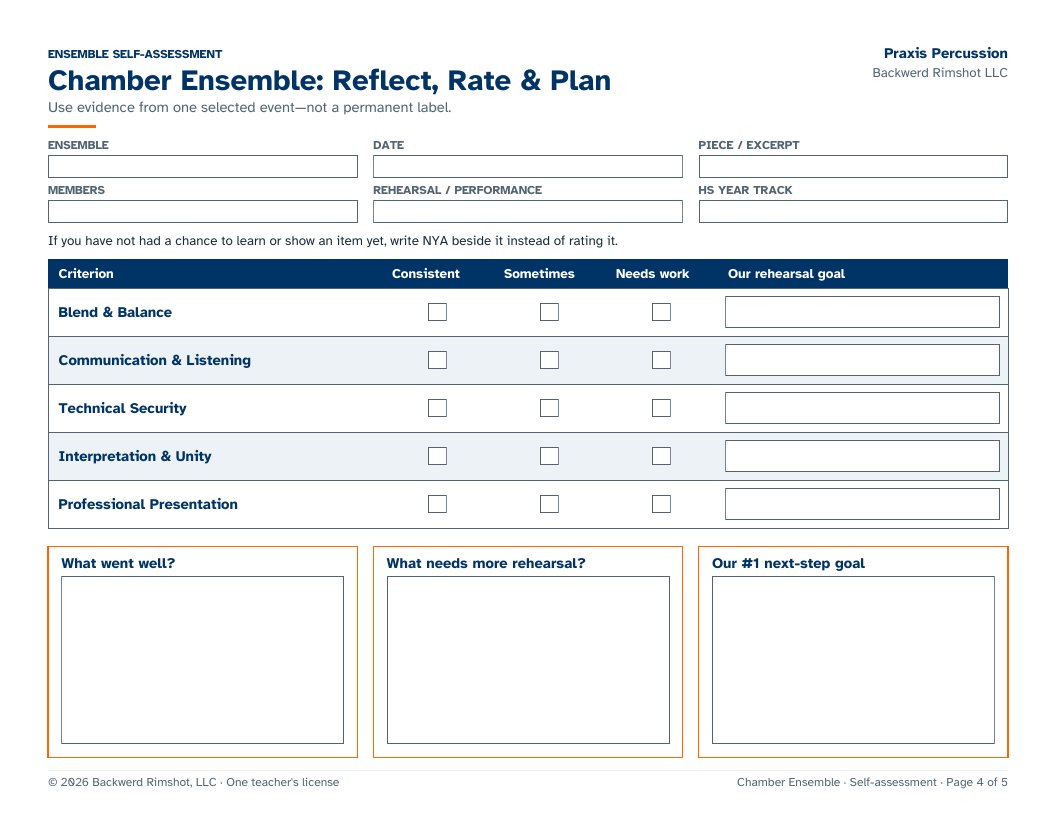
Snare, Keyboard, Timpani, Auxiliary, Concert Section, Chamber Ensemble, Sight-Reading, Solo & Ensemble, and Stage Etiquette. Each rubric rates five criteria against evidence you can see and hear, from 5 Consistent to 1 Beginning.
One ZIP with a Start Here sheet and nine rubrics. Each rubric is five landscape US Letter pages.
Coming soon
Write the task and conditions, then choose the level whose whole descriptor best fits what you saw and heard.
Evidence you have not seen yet is NYA (Not yet assessed). If any rating on a form is NYA, the result is Incomplete, not a lower score.
The quick score is out of 20 and the detailed score is weighted out of 5. Neither converts into the other, and neither is a letter grade.
Weekly checks, juries, chamber and section rehearsals, solo and ensemble preparation, and student self-assessment in a high school percussion program.
It does not score playing for you: the descriptors say what to look and listen for, and the rating is your judgment of one performance. These are Praxis Percussion classroom criteria, not an official or contest rubric, and they name no standard.
One teacher's license. Print, copy and fill in the forms for your own students, every year you teach, and edit any projector slides, Word sheets and Excel score sheets included with your purchase for your classes. Do not give the files to other teachers or post them publicly; a school buys one copy for each teacher.
The HS Classroom Rubric Pack is not on sale yet, and this page will say so until it is. Filling in, saving and reopening the fillable PDFs has not been tested in Adobe Acrobat or macOS Preview, and screen-reader support has not been verified. Questions: email support@praxispercussion.com.